TopLists
An iOS app for ranking the music you love: Apple Music search, ranked lists that sync over iCloud, and a share card built for Instagram Stories.
overview
TopLists is an iOS app for ranking the music you love: build ordered lists, pull in artwork from Apple Music, and share the result as a card. I designed and built all of it.
scoping down
It didn't start as a music app. An early version ranked films, books and games too, each with its own artwork ratio and catalog. It was overkill; the app I wanted was always about albums.
So I cut it back to music, leaving the content-type enum with a single case in case the rest ever returns.
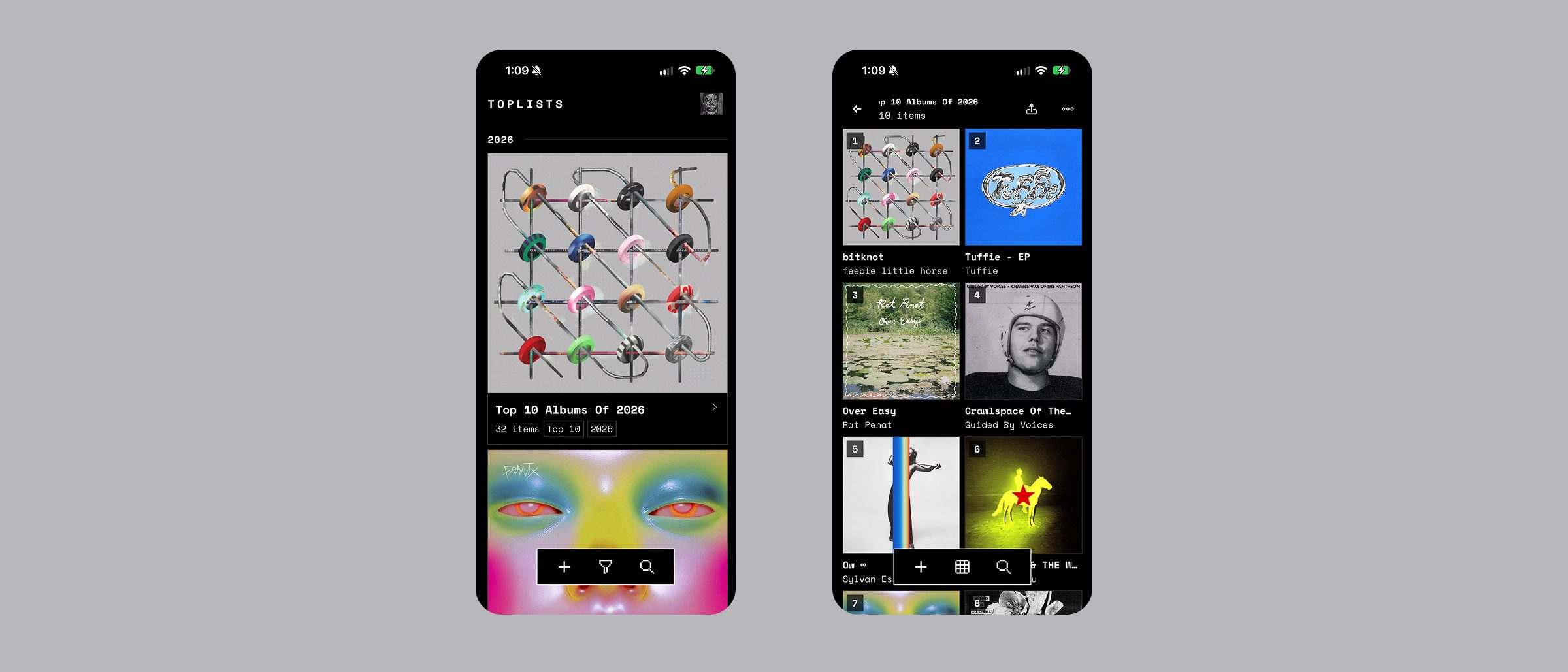
FIG_01 — Home and list detail
search
Adding an album is the most repeated action, so it got the most attention. Search merges MusicKit and two iTunes queries, weighted so the artist match leads: “alanis morissette” should return Jagged Little Pill first, not the deluxe reissue.
ranking and sharing
Ranking is drag-to-reorder, with year and alphabetical sorts, tags, and an archive so a finished list can leave the home screen without being deleted. Everything syncs through iCloud, with no account to think about.
Sharing renders a 9:16 card sized for Instagram Stories: black ground, album art grid, rank numbers overlaid.
FIG_02 — The 9:16 share card
design system
The app runs on its own token layer for colour, type, spacing and modifiers, ported from an earlier React Native version. Adaptive colour tokens handle light and dark mode without a second set of screens.
The look comes from two choices: Space Mono everywhere, and pixel-art icons instead of SF Symbols. Monospace lines rank numbers and years up into columns for free, and the pixel icons keep it from feeling like a productivity app. One accent colour: acid yellow on black.
outcome
Three lists are free; a one-time purchase removes the limit and unlocks alternate app icons, which sit in the picker dimmed and badged so you can see what you'd be buying. Built in SwiftUI with CloudKit sync, a widget and a share extension, and in final prep for the App Store.